

Session preparation coaching is the intentional set of practices and routines coaches and therapists use to arrive mentally and physically ready for a coaching conversation, ensuring clearer goals, better listening, and effective action planning. Known in professional circles as pre-session readiness, this practice covers everything from reviewing client notes to running a brief mindfulness ritual before the first word is spoken. Coaches who skip this step often find themselves reactive rather than responsive. The result is sessions that drift, clients who feel unheard, and practitioners who burn out faster than they expect. What is session preparation coaching, at its core, is a commitment to showing up fully prepared so every session counts.
What are the key components of effective session preparation coaching?
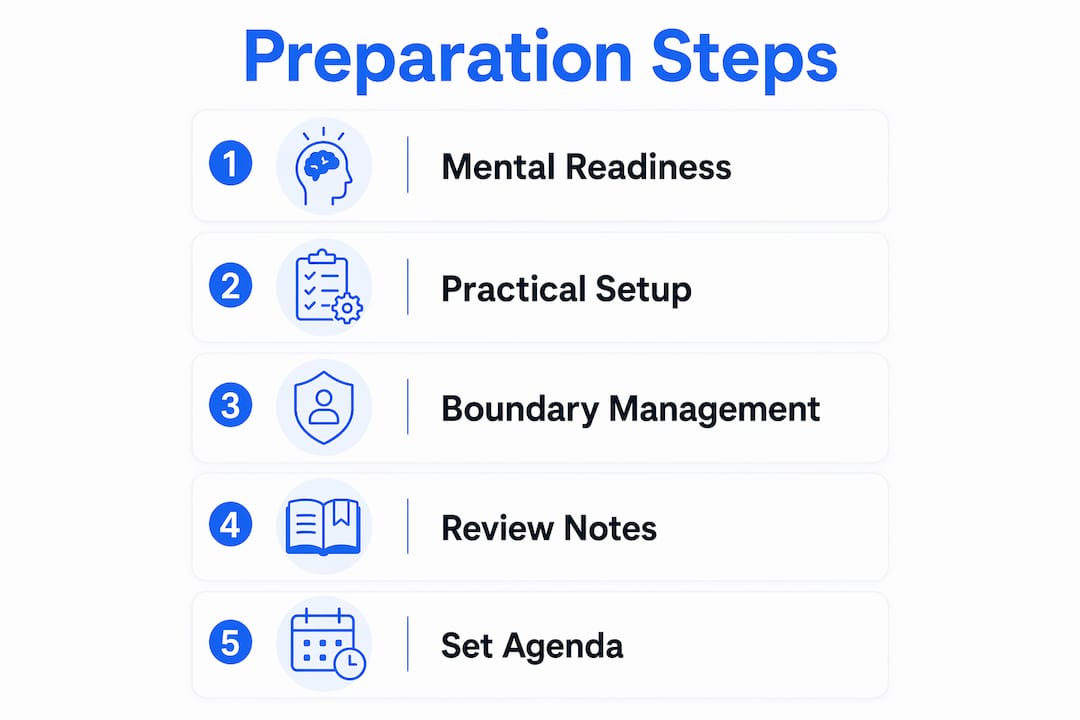
Effective session preparation involves deliberate mental and practical routines that set the conditions for clearer goals, better listening, and productive action planning. The components fall into three clear categories: mental readiness, practical setup, and boundary management.
Mental readiness
Mental preparation means clearing internal noise before the session starts. Coaches carry stress, unfinished thoughts, and emotional residue from previous conversations. A short grounding practice, even two to three minutes of focused breathing or a body scan, resets attention. The goal is to arrive present, not just physically in the room.
Identity cue words are one of the most underused tools in this category. Coaches repeat chosen words like “present,” “curious,” or “calm” mentally before a session to shape their behavior and maintain focus during the conversation. This technique is simple, costs nothing, and takes under a minute. Its effect on session quality is immediate.
Practical setup
Practical preparation covers the structural side of readiness. This includes reviewing the client’s previous session notes, identifying one or two focus areas to explore, and confirming the session agenda. The International Coaching Federation recommends spending 10–15 minutes before a session to mentally prepare and jot down topics or questions. That time investment pays back in sharper, more focused conversations.

Technology and environment checks belong here too. A frozen screen or a noisy background breaks client trust fast. Confirming your video platform, microphone, and lighting before the client joins removes avoidable friction.
Boundary management
Scheduling short gaps between sessions and building consistent pre-session rituals create psychological readiness and protect coach wellbeing. Back-to-back sessions without transition time are one of the fastest routes to burnout. A 10-minute buffer between appointments is not a luxury. It is a professional necessity.
Pro Tip: Build your pre-session ritual into your calendar as a blocked appointment. Treat it with the same weight as the session itself, and you will show up consistently ready.
The critical distinction in all of this: preparation is not scripting. Preparation supports steadiness and responsive questioning rather than pre-deciding every outcome. A prepared coach adapts. A scripted coach performs.
- Mental readiness: grounding rituals, identity cue words, clearing internal noise
- Practical setup: client note review, agenda focus, technology and environment checks
- Boundary management: session buffers, transition rituals, scheduling discipline
- Tools: pre-session prep sheets, checklists, note-taking systems
How does session preparation coaching improve client outcomes?
Preparation directly raises the quality of what happens inside the session. When a coach arrives focused, clients feel it. They open up faster, go deeper, and leave with clearer commitments.
“Preparation is about intentionality, clearing mind clutter, and practical readiness, not scripting a fixed session.” — coachingandmediation.net
The clearest benefit is improved listening. A coach who has reviewed the client’s last session and identified key themes listens with context. Generic questions like “How did things go?” get replaced with targeted ones like “You committed to having that conversation with your manager. What happened?” That specificity signals to the client that their progress matters and is being tracked.
Preparation also enables co-creation. When a coach arrives with a loose agenda rather than a rigid plan, the session can flex around what the client actually needs that day. This balance between structure and responsiveness is what separates effective session coaching from formulaic delivery.
The continuity benefit compounds over time. Coaches who review notes and track client progress across sessions build a richer picture of patterns, blockers, and growth. Clients notice this. They feel seen across weeks, not just within a single hour.
Burnout protection is the benefit coaches most often overlook. Transition and boundary design between sessions sustains presence and reduces burnout. A coach running on empty cannot hold space for a client in crisis. Preparation routines that include recovery time are as much a clinical tool as they are a personal one.
What practical routines and tools can coaches use for session preparation?
The most effective preparation systems are simple enough to repeat every day without thinking. Complexity kills consistency.
A step-by-step preparation protocol
- Review client notes (5 minutes): Read the summary from the previous session. Note any commitments the client made and any patterns you observed.
- Set a session intention (2 minutes): Identify one or two areas you want to explore. Write them down. This is not a script. It is a compass.
- Run a grounding ritual (3 minutes): Breathe, stretch, or use identity cue words. Clear whatever you carried in from the last hour.
- Check your environment (2 minutes): Confirm technology, lighting, and sound. Close unnecessary browser tabs. Silence your phone.
- Schedule a buffer (10 minutes post-session): Block time after the session to write notes and decompress before the next client.
Pro Tip: Use a structured prep sheet with layered prompts about client context, potential traps, and coaching competencies. Prep sheets act as scaffolding that becomes automatic over time, so you no longer need to consciously run through them during sessions.
Preparation tools compared
| Tool | Best for | Time required |
|---|---|---|
| Pre-session prep sheet | Reviewing client context and setting focus | 5–10 minutes |
| Identity cue words | Mental reset and presence before sessions | 1–2 minutes |
| Post-session checklist | Identifying presence gaps and follow-through | 5 minutes |
| Scheduling buffers | Transition and burnout prevention | 10 minutes |
| Mindfulness or grounding ritual | Clearing emotional residue between sessions | 2–5 minutes |
Post-session self-evaluation checklists completed within 30 minutes of a session help coaches identify gaps in presence or follow-through. This feedback loop closes the preparation cycle. What you notice after one session shapes how you prepare for the next.
The International Coaching Federation notes that coaching sessions typically last 30–60 minutes. That window is short. Every minute of preparation before the session protects every minute inside it.
How do you start and manage follow-up sessions effectively?
Follow-up sessions are where preparation coaching pays its biggest dividend. The opening of a follow-up session sets the tone for everything that follows.
Starting with a brief reconnect works better than jumping straight into content. A short, warm opening re-establishes the coaching relationship and signals that this is a focused conversation, not casual chat. The key is keeping it brief. Two to three minutes of reconnection is enough. Beyond that, it becomes social time.
The most common mistake in follow-up sessions is the generic check-in. “How are you?” invites a social answer. “You planned to have that difficult conversation last week. How did it go?” invites a coaching answer. Starting with specific action reviews rather than general check-ins maintains momentum and clarifies progress. This is only possible when the coach prepared by reviewing prior commitments.
Effective follow-up session openings share these qualities:
- They reference something specific from the last session, not a vague “last time we talked about…”
- They invite the client to reflect before the coach offers any interpretation
- They signal a clear transition from reconnect to active coaching
- They avoid generic questions that could apply to any client on any day
- They build on the client’s stated goals, not the coach’s assumptions about what matters
Managing the chit-chat versus coaching balance is a skill that preparation makes easier. When you know where the session needs to go, you can redirect warmly and confidently. Without preparation, coaches often let social conversation run long because they are not sure what to move toward. That lost time belongs to the client.
The broader principle here is that iterative coaching works as an ongoing dialogue rather than isolated meetings. Each session is a chapter, not a standalone story. Preparation is what connects the chapters.
Key Takeaways
Session preparation coaching is the structured practice of mental, practical, and boundary readiness that directly raises coach presence, client outcomes, and practitioner wellbeing across every session.
| Point | Details |
|---|---|
| Preparation is not scripting | Arrive with a compass, not a script; preparation supports responsiveness, not rigid delivery. |
| Mental readiness matters most | Identity cue words and grounding rituals take under five minutes and measurably improve presence. |
| Boundaries prevent burnout | Scheduling 10-minute buffers between sessions protects coach energy and sustains session quality. |
| Follow-up sessions need specificity | Replace generic check-ins with targeted questions tied to prior client commitments. |
| Post-session review closes the loop | Completing a checklist within 30 minutes of a session sharpens preparation for the next one. |
What I have learned after years of preparing for sessions
The coaches I respect most share one habit: they treat preparation as part of the session, not a task before it. That reframe changes everything. When preparation is optional, it gets skipped under pressure. When it is part of the work, it happens every time.
The biggest mistake I see coaches make is over-preparing. They write detailed session plans, predict client responses, and arrive with an agenda so full there is no room for the client. The session becomes a performance review of the coach’s preparation rather than a conversation about the client’s life. Brief and focused preparation outperforms exhaustive preparation every time.
Under-preparing is the other failure mode. Coaches who skip review and arrive cold often spend the first 10 minutes of a session mentally catching up. The client feels it, even if they cannot name it. That lost time and lost trust is hard to recover within a 45-minute window.
The micro-habit that changed my own practice was the post-session checklist. Filling it out within 30 minutes of a session forced me to notice patterns I would otherwise miss. Was I present? Did I ask the right questions at the right moments? Did I let the client lead? Those answers shaped how I prepared for the next session. The preparation cycle became self-correcting.
My advice: start with one ritual. Pick identity cue words, a two-minute breathing practice, or a five-minute note review. Do it before every session for two weeks. Then add one more element. Preparation habits build the same way client habits do: one small commitment at a time.
— Mitch
How ClickCoach supports your session preparation practice
ClickCoach was built for coaches who want to spend their preparation time on clients, not on administrative tasks.
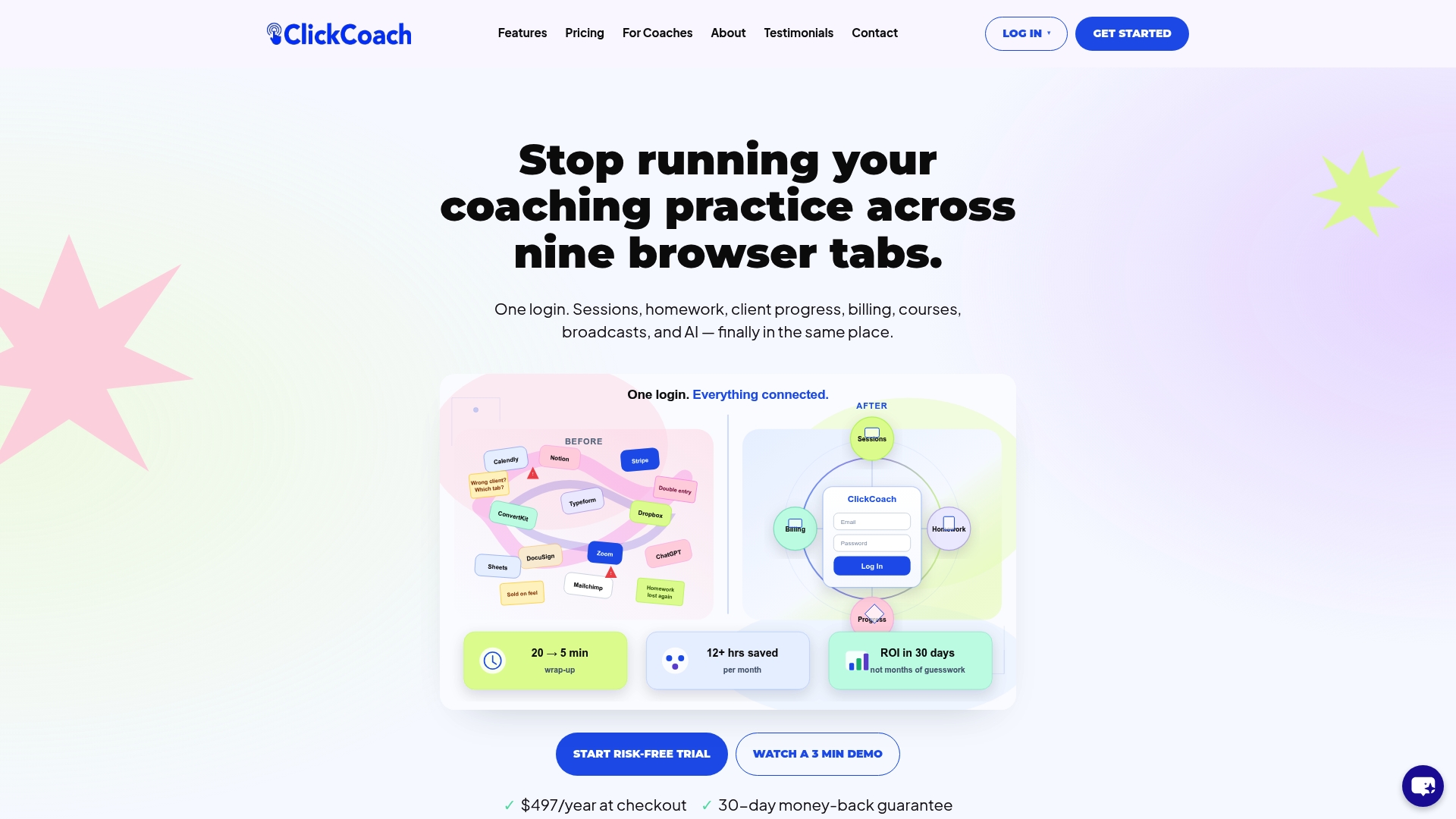
The platform brings session notes, client progress tracking, agenda templates, and scheduling into one place. Before a session, you can pull up a client’s full history in seconds, review prior commitments, and set your focus without switching between apps. ClickCoach also lets you build scheduling buffers directly into your calendar, so transition time between sessions is protected by default. Coaches using the platform report saving up to 20 minutes per session on admin work. That time goes back into preparation, client interaction, and recovery. If you want a practice where preparation is built into the workflow rather than bolted on as an afterthought, explore ClickCoach and see how it fits your practice.
FAQ
What is session preparation coaching in simple terms?
Session preparation coaching is the deliberate practice of getting mentally and practically ready before a coaching or therapy session. It includes reviewing client notes, setting a session intention, and running a brief grounding ritual to arrive focused and present.
How long should session preparation take?
Spending 10–15 minutes before a session on mental preparation and agenda-setting is the standard recommendation from the International Coaching Federation. Brief and focused preparation consistently outperforms longer, more elaborate planning.
What is the difference between preparation and scripting a session?
Preparation creates readiness and responsiveness. Scripting pre-decides outcomes and limits the coach’s ability to follow the client’s lead. Effective preparation gives you a direction, not a fixed path.
How do follow-up sessions benefit from preparation coaching?
Reviewing prior session notes and client commitments before a follow-up session allows coaches to open with specific, targeted questions rather than generic check-ins. That specificity maintains client momentum and signals that progress is being tracked.
Should coaches also prepare after sessions, not just before?
Completing a post-session checklist within 30 minutes of a session helps coaches identify gaps in presence or follow-through. That reflection directly improves preparation quality for the next session, creating a continuous improvement loop.