

Tracking individual progress in group coaching is defined as the systematic process of measuring each client’s behavioral change, skill development, and goal attainment within a shared cohort structure. Most coaches running group programs struggle here because the group format creates a false sense of collective momentum. Everyone seems to be moving forward together, but individual results vary sharply. This guide covers the tools, systems, and behavioral strategies that let you monitor each person’s growth without disrupting group cohesion. You will find specific methods for setting measurable outcomes, managing visibility anxiety, and avoiding the most common tracking mistakes.
What tools and systems help you track individual progress in group coaching?
The right tools determine whether your tracking system actually changes client behavior or just generates reports nobody reads. Client portals, CRM automation, spreadsheets, and dedicated coaching apps each serve a different function. Understanding which tool fits which task saves you time and gives clients a clearer picture of their own progress.
Client portals combined with CRM automation let you automate check-ins and flag low engagement without manual follow-up. Automated nudges keep clients prepared between sessions and prompt reflection after them. That kind of consistent touchpoint is hard to replicate with a spreadsheet alone.

Spreadsheets like Microsoft Excel and Google Sheets work well for coaches managing smaller cohorts who want full control over their data. Tools like Microsoft Power BI take this further by enabling dashboard filtering by KPI or time period, which is especially useful in corporate coaching programs where you need to compare month-to-date and year-to-date performance against targets. The tradeoff is manual upkeep and no built-in client-facing view.
Pro Tip: Frame your assessment forms as conversation starters, not report cards. Assessments used as conversation accelerators raise client engagement and psychological safety, which means clients fill them out honestly instead of strategically.
| Tool | Best for | Limitation |
|---|---|---|
| Client portal with CRM | Automating check-ins, surfacing progress meters | Requires setup time and a learning curve |
| Google Sheets / Excel | Small cohorts, custom KPI tracking | No client-facing view, manual updates |
| Power BI dashboards | Corporate programs, multi-KPI reporting | Overkill for individual coaches |
| Dedicated coaching apps | Homework delivery, progress logs | Varies widely in depth of reporting |
How to design an effective progress tracking system for group coaching
A well-designed tracking system starts with clarity on what you are actually measuring. Vague goals produce vague data. Specific, measurable outcomes produce evidence you can act on.
Follow these four steps to build a system that works across an entire cohort:
-
Define 3 to 5 measurable outcomes per cohort. Every group program needs a short list of outcomes that apply to all participants. Examples include communication confidence scores, goal completion rates, or leadership behavior ratings. Keeping the list to five or fewer prevents data overload.
-
Run recurring assessments at key milestones. A systematic tracking approach that uses assessment forms at program start, midpoint, and end gives you comparable data across the cohort. Coaches who automate this process report saving up to 20 minutes per session on administrative tasks.
-
Combine quantitative and qualitative data. Pre and post assessment scores tell you what changed. Reflection logs tell you why. Combining both methods produces the most reliable view of individual growth and gives you richer material for client conversations.
-
Send a mid-program pulse survey. Mid-program pulse surveys are the fastest way to catch disengagement before it becomes dropout. A three-question survey at the program midpoint tells you which clients need a direct conversation and which parts of your curriculum need adjustment.
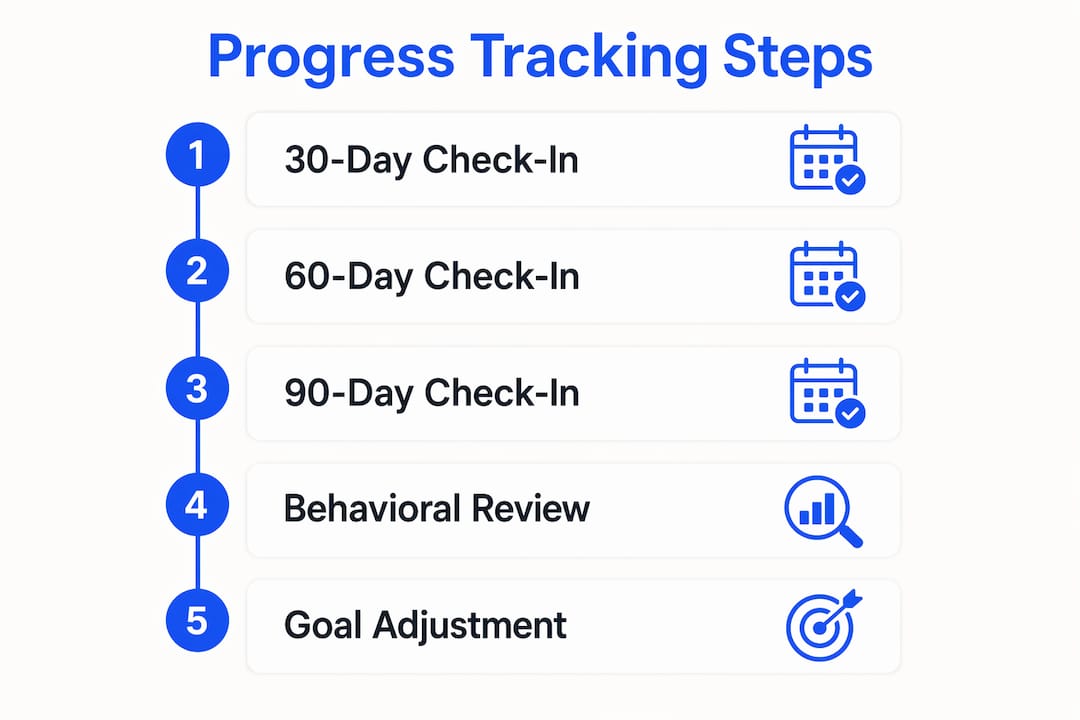
Pro Tip: Schedule 30, 60, and 90-day check-ins as recurring calendar events at program launch. Structured 30/60/90-day check-ins with behavioral commitments built in produce far more sustained change than open-ended follow-up.
The data table below shows how to pair each tracking method with the right data type:
| Tracking method | Data type | Review frequency |
|---|---|---|
| Pre/post assessment scores | Quantitative | Start and end of program |
| Reflection logs | Qualitative | Weekly or biweekly |
| Pulse surveys | Mixed | Midpoint |
| 30/60/90-day check-ins | Behavioral | Monthly |
| Client portal progress meters | Quantitative | Ongoing |
How do you maintain individual motivation while tracking progress in a group?
Tracking creates accountability, but it also creates comparison. When clients can see each other’s progress, some will feel motivated. Others will feel exposed. This is called visibility anxiety, and it is one of the most underaddressed problems in group coaching.
Anonymizing aggregate data for group dashboards while keeping individual trackers private reduces client discomfort without sacrificing transparency. Clients see how the group is performing overall, but their personal data stays between them and you. That balance increases psychological safety and honest participation.
Beyond privacy, the structure of your tracking system itself affects motivation. Non-linear progress is normal. Clients who plateau in week four often make their biggest breakthroughs in week eight. Design your system to celebrate small wins alongside major milestones. A simple acknowledgment inside the client portal when someone completes a reflection log or hits a micro-goal prevents the mid-program engagement dips that derail group cohorts.
Behavioral commitments are the other key lever. Each client should carry one specific, observable commitment tied to a 90-day timeframe. Not “I will communicate better,” but “I will give one piece of direct feedback to a team member every week for 90 days.” That specificity makes progress trackable and gives the client a clear standard to hold themselves to.
- Keep individual progress data private by default; share only anonymized cohort-level data with the group
- Assign one specific 90-day behavioral commitment per client at program launch
- Build celebration checkpoints into the tracking system for small wins, not just final outcomes
- Use peer accountability pairs within the group to reinforce commitments between sessions
- Monitor engagement signals like portal login frequency and assignment completion as early warning indicators
“Framing assessments as conversation accelerators rather than judgment tools raises client engagement and psychological safety in group coaching.” — Assessment.com
What are the most common pitfalls when tracking individual progress?
The biggest mistake coaches make is treating insight as the finish line. A client who understands their communication pattern has gained awareness. That is not the same as changing their behavior. Insight-only tracking without behavioral commitments drops behavior change rates by 65%. The data is clear: awareness without a specific commitment produces almost no lasting change.
The second pitfall is overloading clients with metrics. When you ask clients to track six different behaviors, complete three weekly forms, and respond to daily prompts, they stop engaging with all of it. Pick the two or three metrics that matter most for your program outcomes and track those consistently.
The third pitfall is skipping the feedback loop. Tracking data only has value if you act on it. A three-phase debrief structure works well here: start with the insight the data reveals, move into a coaching conversation about what it means, and close with a specific commitment the client will carry forward. This phased debrief approach turns raw assessment data into behavior change rather than a report that sits in a folder.
“Coaching progress tracking must convert diagnostic insights into observable behavioral commitments to drive change.” — Coachello
- Avoid the insight-only trap. Every assessment debrief must end with a written behavioral commitment, not just a conversation.
- Limit your metrics. Track three outcomes per client maximum. More than that creates noise, not clarity.
- Close the feedback loop. Review tracking data with clients at every check-in, not just at program end.
- Tie individual goals to organizational KPIs. Linking coaching goals to KPIs gives you stakeholder evidence and gives clients a concrete reason to stay committed.
Key Takeaways
Tracking individual progress in group coaching requires measurable outcomes, behavioral commitments, and the right mix of quantitative and qualitative data to produce real, lasting change.
| Point | Details |
|---|---|
| Define cohort outcomes first | Set 3 to 5 measurable outcomes per group before the program starts. |
| Combine data types | Pair assessment scores with reflection logs for a complete picture of growth. |
| Protect individual privacy | Keep personal trackers private and share only anonymized group data. |
| Require behavioral commitments | Each client needs one specific, observable 90-day commitment to drive change. |
| Use pulse surveys at midpoint | A short mid-program survey catches disengagement early and guides curriculum adjustments. |
What I have learned from tracking progress across dozens of group cohorts
Most coaches I talk to are collecting data. Very few are using it. They run assessments, log the results, and then move on to the next session without closing the loop. The data becomes a record of what happened rather than a tool for what happens next.
The shift that changed how I work was treating every piece of tracking data as a prompt for a conversation, not a score to file away. When a client’s reflection log shows the same frustration three weeks in a row, that is not a data point. That is a signal that something in the program or in their environment is blocking progress. The tracking system surfaces it. The coaching conversation addresses it.
The other thing I have found is that coaches underestimate how much the structure of a tracking system affects client confidence. When clients can see their own progress inside a portal, even incremental progress, they stay engaged. When progress is invisible, they assume they are not making any. Visibility, done right, is a motivation tool.
The coaches who get the best results from group programs are the ones who treat tracking as a coaching skill, not an administrative task. They design their systems with the same care they bring to their session plans.
— Mitch
How ClickCoach makes individual tracking manageable at scale
Running a group coaching program means managing multiple clients, sessions, assignments, and check-ins at once. ClickCoach brings all of that under one login, so you stop losing time switching between apps and spreadsheets.
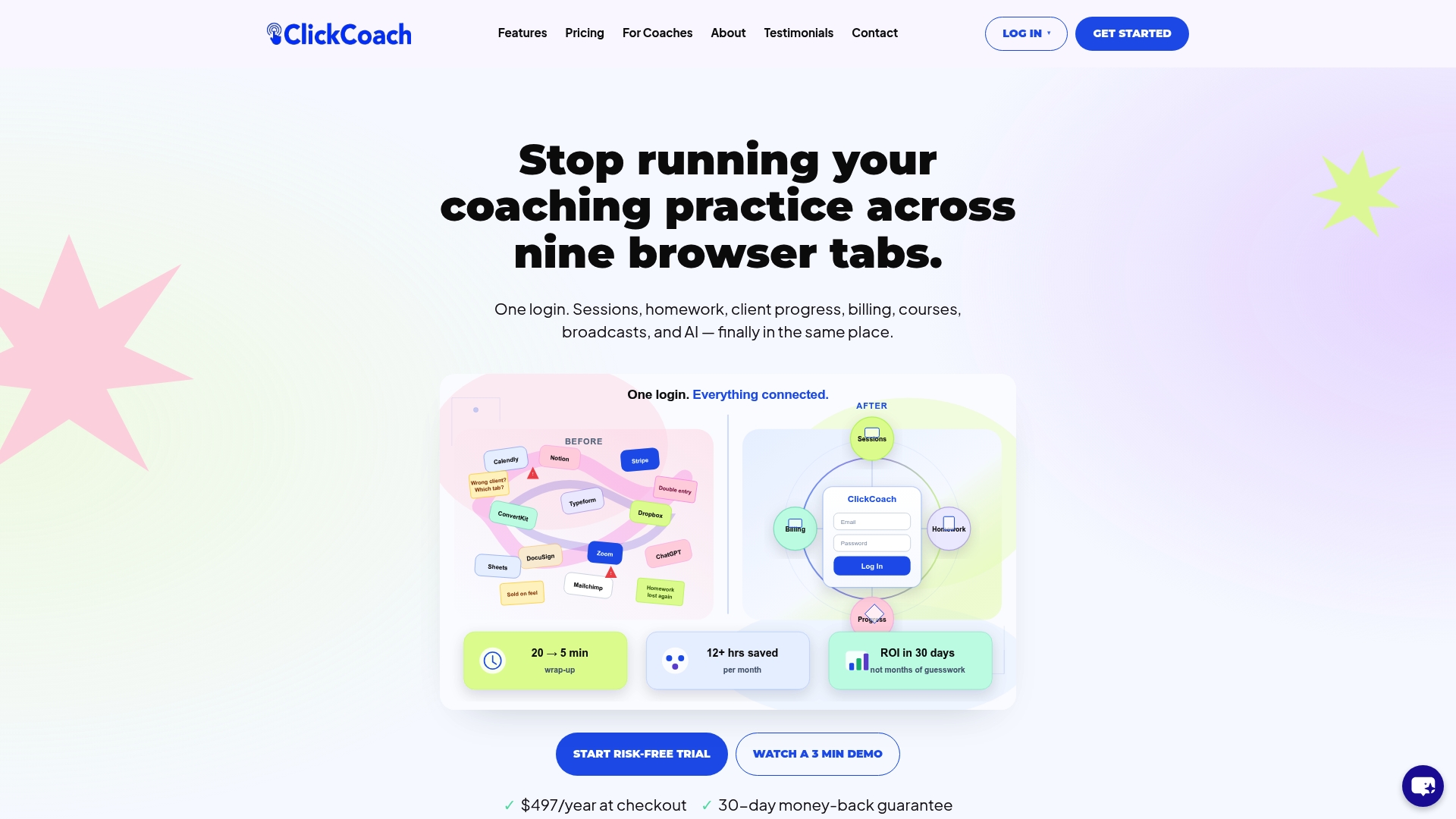
ClickCoach gives each client a branded portal where they can view their progress, complete assignments, and respond to check-ins. The platform’s AI assists with drafting homework and tracking client progress across your entire cohort. Coaches using ClickCoach report saving up to 20 minutes per session on administrative work. If you are ready to run group coaching programs with the kind of individual tracking this article describes, ClickCoach is built for exactly that.
FAQ
What does it mean to track individual progress in group coaching?
Tracking individual progress in group coaching means measuring each client’s behavioral change, goal completion, and skill development separately, even within a shared program structure. The goal is to hold each person accountable to their own outcomes, not just the group’s collective experience.
How many metrics should I track per client?
Track three metrics per client at most. Limiting your metrics to the outcomes that matter most prevents data overload and keeps clients engaged with the tracking process.
What is visibility anxiety in group coaching?
Visibility anxiety occurs when clients feel uncomfortable having their progress compared to others in the group. Keeping individual data private and sharing only anonymized group-level data reduces this discomfort and increases honest participation.
Why do behavioral commitments matter more than insights?
Behavior change rates drop by 65% when clients gain insight without a specific behavioral commitment attached. Awareness alone does not produce lasting change. A written, observable commitment does.
How often should I review tracking data with clients?
Review tracking data at every scheduled check-in, not just at program end. Structured reviews at 30, 60, and 90 days give clients regular feedback and give you the chance to adjust the program before disengagement sets in.