

ClickCoach is our top pick for coaches who need a connected onboarding workflow from purchase through first session, because it keeps contracts, intake, scheduling, payments, and a branded client portal in one auditable system. Paperbell suits solo coaches who want a simple purchase-to-booking flow, Capterra reviews show. Kajabi fits course-driven coaching, and Coaching.com serves enterprise or sponsor-funded programs.
TL;DR:
- ClickCoach offers an end-to-end onboarding process with a single login, integrating purchase, contracts, intake, scheduling, and client portal, with AI-assisted homework drafts.
- Solo coaches benefit most from Paperbell’s streamlined purchase-to-booking flow, but it may outgrow practices with multiple coaches or complex analytics needs.
- Platforms like Kajabi and Thinkific focus on course delivery, offering onboarding via learner portals rather than coaching-specific client record systems.
- Enterprise solutions such as Coaching.com and CoachHub cater to organizations requiring multi-stakeholder access, sponsor reporting, and larger-scale management features.
- Testing the entire onboarding flow with real clients over two to four weeks helps identify friction points before full implementation.
Table of Contents
- Top Picks at a Glance: Which Onboarding Software Fits You
- Detailed Mini-Reviews: Onboarding Capabilities Compared
- Feature Checklist: What Onboarding Software Actually Needs
- How to Choose and Roll Out Onboarding Software
- How the 2025 ICF Code Changes What You Look For in Software
- What Actually Matters When You’re Onboarding Clients
- How ClickCoach Covers the Onboarding Workflow End to End
- FAQ
- Sources
Top Picks at a Glance: Which Onboarding Software Fits You
Coaches shopping for onboarding software are really asking one question: can this platform carry a client from “I want to work with you” to “I’m ready for session one” without five separate logins? The shortlist below ranks the strongest options by onboarding completeness first, then narrows by who each tool actually serves well.
ClickCoach leads for coaches who want the full arc, purchase, contract, intake, scheduling, portal access, and progress tracking, in one workspace. Its standout is a connected workflow paired with AI-assisted homework drafting that stays coach-reviewed before anything reaches a client. Pricing runs as a flat annual subscription rather than per-client fees.
Paperbell is the pick for solo coaches who want the fastest path from “sell a package” to “book a session,” with contracts and scheduling built into the same purchase flow, according to Capterra’s user reviews. It is best for coaches who do not need multi-coach administration.
Kajabi and Thinkific fit coaches whose primary offer is a course or membership, with coaching layered on top. Onboarding here means a learner portal and a product purchase flow rather than a dedicated client-coaching record system.
Coaching.com and CoachHub are built for organizational and sponsor-funded coaching programs, where HR teams or program sponsors need reporting and multi-stakeholder visibility rather than a single-coach experience.
Here is the shortlist in order of onboarding completeness:
- ClickCoach: best for coaches who want an end-to-end, auditable onboarding workflow and practice-level analytics.
- Paperbell: best for solo coaches who want a simple purchase-to-booking flow.
- Kajabi or Thinkific: best for coaches who sell courses with coaching as a supplemental offer.
- Coaching.com or CoachHub: best for enterprise or sponsor-funded coaching programs with multiple stakeholders.
- Simply.Coach: best for coaches who want integrated resource libraries alongside session and goal tracking.
Each of these tools solves a real problem, but they solve different problems. A coach running a solo practice with recurring one-on-one clients has different onboarding needs than a coaching firm managing twelve coaches under one brand.
Detailed Mini-Reviews: Onboarding Capabilities Compared
Here is how each platform handles the pieces that make up a real onboarding workflow: purchase, contract, intake, scheduling, portal access, and payment.
ClickCoach covers the onboarding chain in a single login: a client purchases a package, signs an e-contract, completes an intake form, books a first session, and lands in a branded client portal where session notes, homework, and progress tracking already live. The standout feature is that AI drafts homework and follow-up actions, but the coach reviews and approves everything before a client sees it, which matters for coaches wary of sending unverified AI output. The practical caveat: it is a single-tier subscription, so coaches comparing feature-gated pricing elsewhere will need to evaluate whether the full feature set matches their practice size.
Paperbell handles purchase, contract, scheduling, and intake surveys inside one flow, and session notes are built in as well, according to verified Capterra reviews that praise its integrated approach for solo coaches. The onboarding workflow is tight but intentionally scoped to single-coach practices. The caveat is that coaches running multi-coach teams or needing deep analytics will likely outgrow it.
Simply.Coach brings a resource library and structured client journeys into the mix, alongside session and goal tracking. G2’s comparison data notes that Simply.Coach users rate it well on resource management and platform stability. The onboarding workflow covers intake and scheduling, but coaches should verify how deeply contracts and e-sign are integrated versus handled through a separate tool. The caveat: its differentiation is content and resources, not necessarily the fastest purchase-to-first-session path.
CoachAccountable is frequently compared against Simply.Coach on ease of use and customer support, per the same G2 comparison. Users rate it favorably for straightforward setup. The onboarding flow supports scheduling, forms, and accountability tracking. The caveat is that some users report a steeper learning curve around customization than competitors with simpler interfaces.
CoachVantage offers a traditional practice management setup: scheduling, billing, and client portals exist, but the onboarding workflow leans more toward administrative tracking than a guided, client-facing purchase-to-portal journey. It suits coaches who want conventional practice management without a heavy emphasis on automation.
Bonsai is strongest where contracts and invoicing are concerned. Coaches who want robust billing templates and legal-style contract language will find it useful, but Bonsai was not built specifically for coaching, so intake forms, session notes, and client portals are either absent or require workarounds. The caveat: it is a general freelancer business tool, not a coaching-specific onboarding system.
HoneyBook works well for coaches who package services as projects with proposals and invoicing. Its onboarding flow mirrors a creative-services business: proposal, contract, invoice, project timeline. The caveat is that it lacks coaching-specific features like session notes, progress tracking, or goal-setting modules.
Kajabi and Thinkific both center onboarding around course delivery. A client purchases access, lands in a learner portal, and moves through modules. Coaching sessions, when offered, usually sit alongside the course rather than inside a dedicated coaching record system. The caveat: neither platform was designed for one-on-one coaching documentation, so coaches relying heavily on individualized session notes will need a second tool.
Delenta focuses on coaching packages, scheduling, and client records, making it a reasonable fit for independent coaches and small firms. The onboarding workflow covers the basics, but it does not emphasize analytics or multi-coach administration the way platforms built for scaling practices do.
Coaching.com and CoachHub are designed for larger-scale implementations: enterprise coaching programs, sponsor reporting, and multi-coach rosters. The onboarding workflow here often includes sponsor or HR stakeholder visibility, which solo-practice tools do not offer. The caveat: these platforms are sized and priced for organizational buyers, not individual coaches building a private practice.
UpCoach supports cohort and program-based workflows, which fits coaches running structured group programs rather than purely one-on-one client relationships. The onboarding flow accommodates multiple participants moving through the same program stages.
LearnWorlds, Satori, GetResponse, Cognician, Nudge Coach, My PT Hub, Practice, and Coaching Loft each address a narrower slice of the onboarding chain. LearnWorlds and Satori lean toward course and program delivery. GetResponse is fundamentally email marketing software with some coaching-adjacent use cases, as GetResponse’s own content acknowledges when positioning itself among coaching tools. Cognician focuses on guided digital coaching content rather than full practice administration. Nudge Coach and My PT Hub lean toward habit tracking and fitness-coaching check-ins. Practice offers general scheduling and client management but without the coaching-specific depth found in purpose-built platforms. None of these functions as a complete purchase-to-portal onboarding system on its own, so coaches considering them should expect to combine tools.

Feature Checklist: What Onboarding Software Actually Needs
A real onboarding workflow is not a form and a calendar link. The 2025 ICF Code of Ethics requires coaches to establish agreement on roles, responsibilities, confidentiality, financial arrangements, information exchange, and record handling before coaching begins, and software should make those steps explicit and checkable rather than assumed.
- Contract and e-sign: a client should sign a clear agreement before the first session, not after.
- Intake form: structured questions that capture goals, context, and consent, not a generic contact form.
- Scheduling and calendar sync: booking the first session should happen inside the same flow as the purchase.
- Payments and invoicing: the platform should capture payment without routing the client to a separate checkout.
- Client portal access: clients need a home base for notes, homework, and progress, available immediately after purchase.
- Exportable records: coaches need the ability to pull client records out, both for their own backup and for compliance requests.
- Role-based access: in team or sponsor-funded settings, who sees what must be configurable, not implicit.
Five questions worth asking any vendor before signing a contract:
- Can I customize the intake form without a developer?
- Does the client complete purchase, contract, and scheduling in one flow, or do they bounce between tools?
- Can I export full client records if I switch platforms later?
- Can I set role-based permissions for other coaches or sponsors on my team?
- Who reviews AI-generated content before a client sees it, and can I turn that control on or off?
Pro Tip: Run one real client through the entire onboarding flow yourself before rolling it out to your full roster. A broken step shows up faster in a live test than in a feature list.
| Category | Must have | Nice to have |
|---|---|---|
| Contracts | E-sign before session one | Custom clause libraries |
| Intake | Structured goal and consent form | Progressive profiling over time |
| Scheduling | Synced calendar booking | Automated reminders |
| Payments | Integrated checkout | Multiple currency support |
| Records | Exportable client data | Advanced analytics dashboards |
How to Choose and Roll Out Onboarding Software
Picking a platform on paper is the easy part. The real test is running one client through it end to end before committing your whole roster.
- Configure one real package with pricing, a description, and the intake form you actually want clients to complete.
- Run a mock client through the full flow: purchase, e-sign, intake, scheduling, and first login to the portal.
- Verify payment capture actually lands in your account and the contract is stored somewhere you can retrieve later.
- Test the export function before you need it, not after you decide to switch platforms.
- Check role-based permissions if you work with other coaches, assistants, or sponsors who need limited visibility.
A reasonable pilot runs two to four weeks with a handful of new clients, not your entire existing roster. Track three numbers: first-session completion rate, intake completion rate, and payment capture rate. If clients are completing intake forms but not booking first sessions, the friction is in scheduling. If payments are not capturing cleanly, that is a billing integration problem worth catching before it affects thirty clients instead of three.
Red flags that should pause a rollout: clients abandoning the purchase flow before completing payment, contracts that do not save or are hard to retrieve, intake data that cannot be exported, or AI-generated content reaching a client without your review. Any one of these is worth fixing before expanding the pilot.
How the 2025 ICF Code Changes What You Look For in Software

The 2025 ICF Code of Ethics asks coaches to reach clear agreement with clients on roles, responsibilities, confidentiality, financial terms, information exchange, and how records are handled, before coaching begins. That is not a philosophical point. It changes what “good onboarding software” means in practice.
An auditable agreement means the platform stores a signed contract you can retrieve on request, not a verbal understanding. Confidentiality means role-based access actually restricts who can view session notes, especially when a sponsor or employer is paying for the coaching. Record handling means you can export a client’s full history if they ask for it or if you switch platforms.
Team and sponsor-funded coaching introduces a specific wrinkle: on boarders must decide and document which parties can access which information, and role-based permissions with explicit sponsor consent steps are necessary to stay compliant.
For AI-assisted features, the same logic applies: if a platform drafts homework or summaries using AI, you need a visible review step before anything reaches a client, since the coaching relationship and its confidentiality terms are yours to protect, not the software’s.
What Actually Matters When You’re Onboarding Clients
The biggest mistake I see coaches make is treating onboarding as paperwork to get through rather than the first real signal a client gets about how the relationship will run. A clunky purchase-to-first-session experience tells a new client, subtly, that the rest of the engagement might be clunky too.
Two changes make an outsized difference. First, let a client purchase and land in their portal in one motion, no separate welcome email with a login link three days later. Second, keep intake forms short at first and add depth over time rather than front-loading twenty questions before a client has met you.
On AI: draft away, but review everything before a client sees it. The time AI saves in drafting homework is only worth it if you still catch the one line that reads wrong for that particular client.
— Mitch Russo
How ClickCoach Covers the Onboarding Workflow End to End
We built ClickCoach around the exact gap this article keeps surfacing: coaches patching together a checkout tool, a separate e-sign app, a calendar link, and a notes document, and hoping nothing falls through the cracks between them.
Inside ClickCoach, a client purchases a package, signs a contract, completes intake, books a first session, and arrives in a branded client portal without switching tools. Session notes, homework, and progress tracking live in the same workspace your billing already runs through, and AI drafts follow-up actions that you review before anything reaches a client, through our coaching notes software.
If you want to see how it fits your practice, start by piloting one package with one new client:
- Set up a single package with your real pricing and intake questions.
- Run one client through purchase, contract, scheduling, and portal access.
- Check that your session notes and billing show up where you expect them.
| Practice type | ClickCoach fit |
|---|---|
| Solo coach | Full onboarding chain in one subscription, no per-client fees |
| Multi-coach company | Role-based access across coaches under one practice |
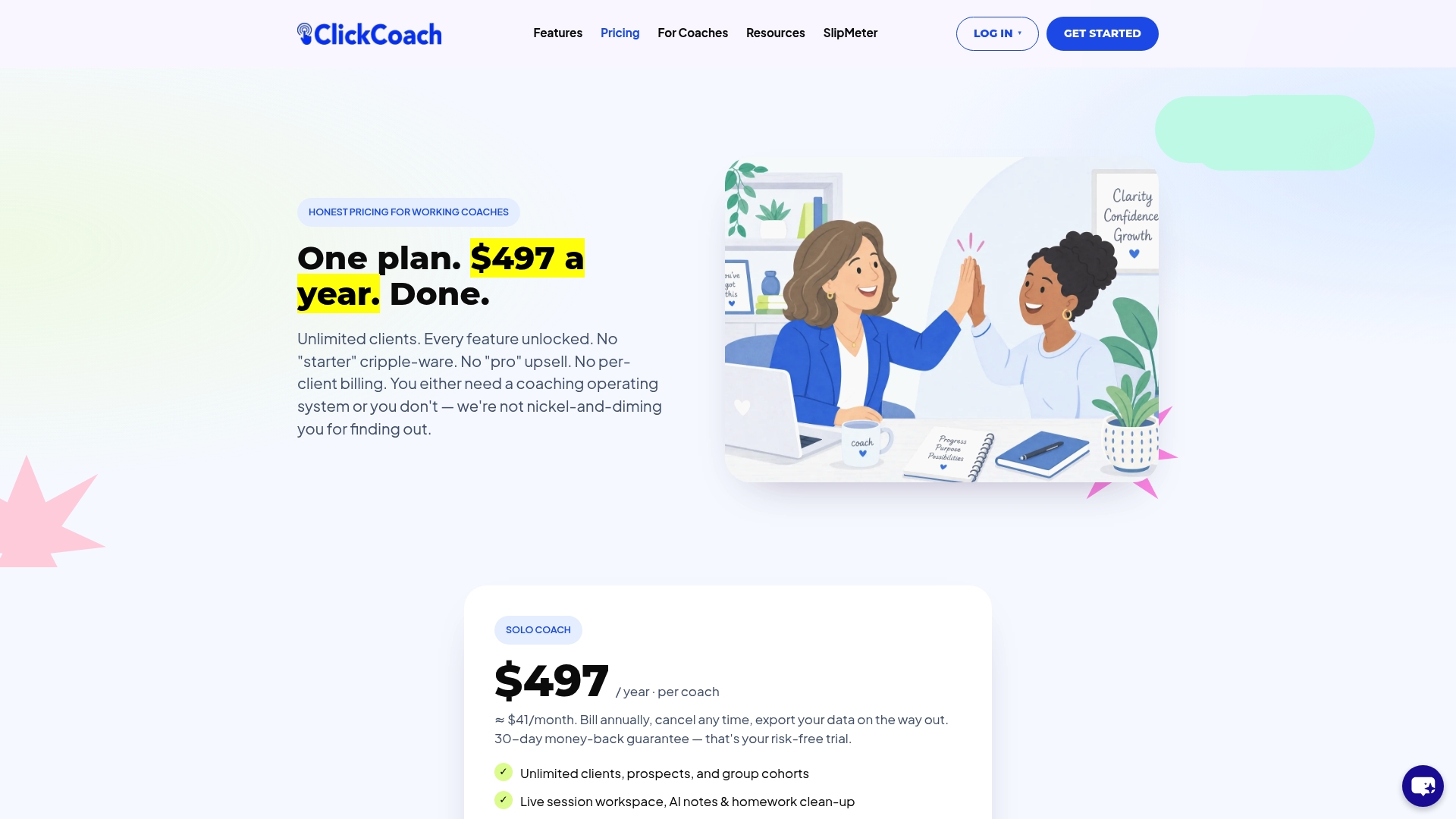
Solo coach and multi-coach plans are both priced at $497 per year per coach, listed on our pricing page. Check availability and pricing details directly on that page before you commit.
FAQ
What is the best coaching software platform?
The best platform depends on what you need onboarding to cover: ClickCoach suits coaches who want a connected purchase-to-portal workflow, while Paperbell fits solo coaches wanting a simpler purchase-and-booking flow, according to Capterra reviews. Platforms built for courses, like Kajabi, or for enterprise programs, like Coaching.com, serve different needs entirely.
What is the 70/30 rule in coaching?
Definitions of certain resource allocation rules vary across coaching resources, and no single authoritative source ties them specifically to onboarding software.
How much does Paperbell cost per month or year?
Paperbell’s current pricing is not listed in the sources reviewed for this article, so we are not able to state a figure here. Check Paperbell’s own pricing page directly for current plans and costs.
What is the 80/20 rule in coaching?
Like similar allocation rules, the “80/20 rule” is not tied to a single ICF or industry-standard definition.
Does onboarding software need to be ICF compliant?
No software platform is itself “ICF compliant,” since the 2025 ICF Code of Ethics governs coach behavior, not vendor products. What matters is whether a platform lets you document roles, confidentiality, and financial terms in a way that supports your own compliance with the Code.